Back to Crop Potential
Spice
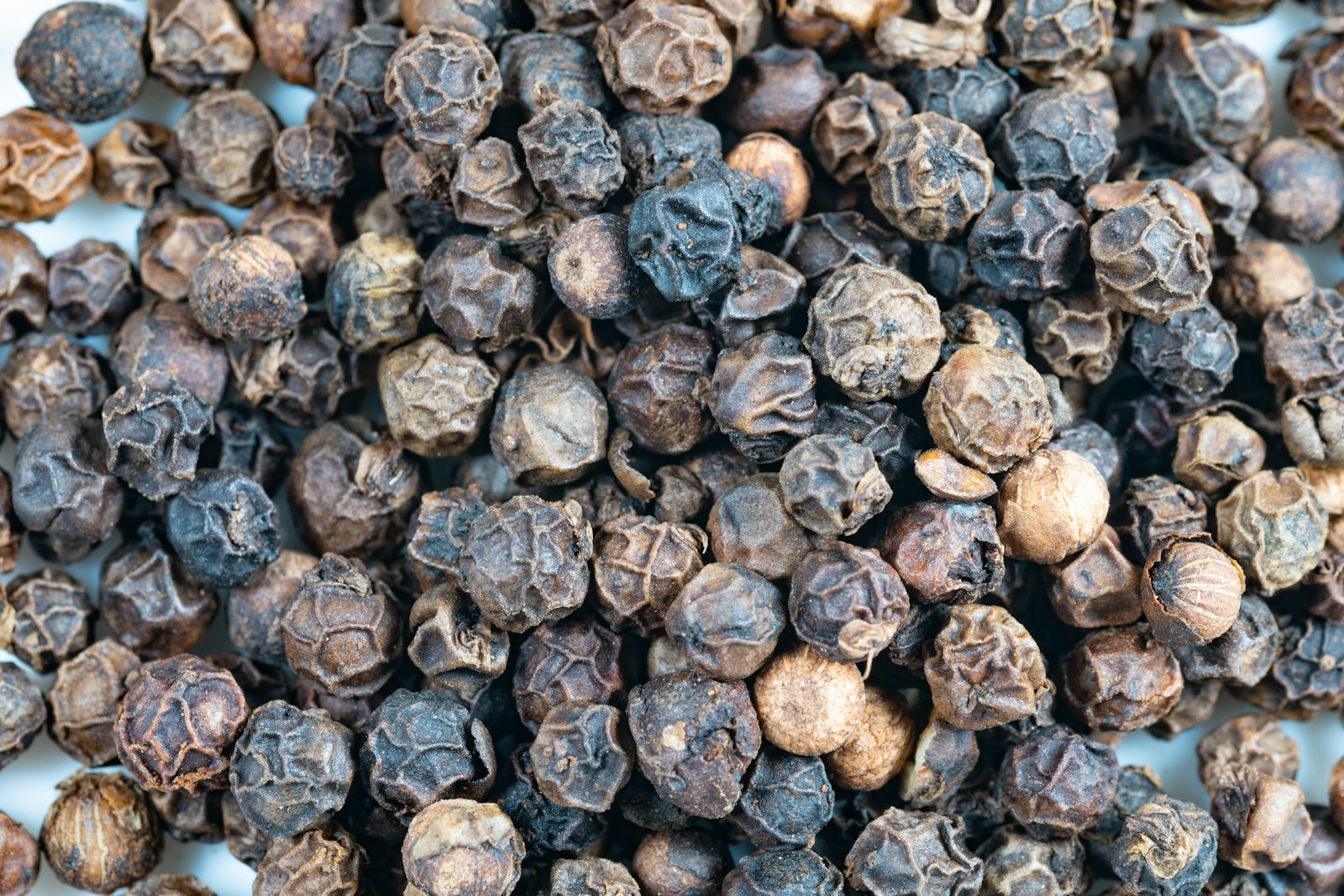
Black Pepper
From 150 to 800+ kg per acre per year. Panniyur and Karimunda on areca trellis with disease-free vines closes the gap to Vietnam.
From 150 to 800+ kg per acre per year. Panniyur and Karimunda on areca trellis with disease-free vines closes the gap to Vietnam.
Most farms in India operate well below their yield potential. The gap is rarely about land or weather. It is about which seed, which water, which feed, and which decisions, made on which day. Here is what we are aiming for.
No magic. No buzzwords. Each of these is a small lever. Pulled together, they compound into the yield you see above.
Most Indian pepper farms replant from infected mother vines, carrying Phytophthora foot rot and slow-decline virus. Tissue-cultured or hot-water-treated cuttings from accredited nurseries cut early decline by 70%.
Panniyur-1, Panniyur-7, IISR-Sakthi and Karimunda yield 3-5 kg dry pepper per vine at maturity, against 1-1.5 kg from local seedling vines. Same care, three times the yield, just from variety.
Pepper is a vine; it needs a tree. Areca and silver-oak are the two most used trellis trees in India. They give shade, support and a second income from areca nut or timber.
Pepper roots are surface feeders. Drip with daily fertigation in the dry season prevents the summer flush drop. Annual NPK split into 3 doses, with magnesium and zinc.
Foot rot is the biggest killer. Drip (no overhead water), good basin drainage, 12-monthly Trichoderma drench, and copper oxychloride at first sign together hold disease below 5% vine loss.
A Panniyur-1 spike runs 8-12 cm and packs 60-90 berries. Local varieties run 4-6 cm with 30-40 berries. Same harvest labour, twice the yield.
From day one to harvest, here is the actual work. Plain English. No jargon. This is the playbook we follow on every farm we manage.
Pepper needs well-drained loam, pH 5.5-6.5, rainfall 1500-2500 mm, partial shade. Areca, silver-oak or coconut existing on land assessed for trellis use.
Only certified Panniyur-1, Panniyur-7, IISR-Sakthi or Karimunda rooted cuttings from accredited nurseries. 600 vines per acre at 3x3 m spacing or trained 1 vine per areca tree.
50x50x50 cm pits with FYM, neem cake and rock phosphate. Vine planted at the base of the trellis tree. Mulch ring laid.
1 dripper per vine at 2 lph, scaling to 2 as vine matures. Annual NPK in three splits via fertigation: pre-monsoon, post-monsoon, summer.
Climbing shoots tied to the trellis at 30 cm intervals. Lateral fruiting branches encouraged. Side suckers removed.
Annual Trichoderma drench. Bordeaux paint on cut surfaces. Pollu beetle and top-shoot borer caught with pheromone trap and weekly scout. No prophylactic chemical sprays.
Spikes harvested at colour-break (one or two berries turning red). Spikes blanched in hot water 1 minute, then sun-dried 4-5 days on a clean tarpaulin. Graded by berry size and density.
What happens, when. So you know the path, the wait, and the pay-off, before you start.
Pits prepared, trellis trees confirmed, rooted cuttings planted at start of monsoon. Drip in.
Vine climbs to 3-4 m. Lateral fruiting branches start forming. No fruiting allowed.
150-300 kg dry pepper per acre. Quality establishes the buyer.
400-600 kg dry per acre. Trichoderma protocol on schedule.
600-800+ kg dry per acre. Productive for 20-30 years if disease pressure stays low.
What it costs, what it returns, when it pays back. Honest ranges, not best-case-only numbers.
Every yield range here is anchored to research from Indian and international institutions. Not marketing. Not anecdote.
Improved black pepper varieties Panniyur-1, Panniyur-7, IISR-Sakthi and Karimunda under drip and stage-wise nutrition deliver 600-800+ kg dry/acre/year against 150-300 kg/acre on local seedling vines.
Trichoderma drench, copper-based foliar spray pre-monsoon and strict no-overhead-water discipline reduce Phytophthora foot rot incidence from 25-40% of vines affected to under 5%.
India's national average pepper yield (350-400 kg/ha) trails Vietnam (2,000-3,000 kg/ha) and Brazil (1,500-2,500 kg/ha) primarily due to old infected mother stock, low fertigation adoption and inconsistent disease management.
Black pepper is a long-lived perennial vine that, when supported on a living trellis with adequate shade and drainage, remains commercially productive for 20-30 years.
We map your land, soil, water and current practice against the targets above and tell you, honestly, what your farm can actually deliver. No charge for the first conversation.
Get a Yield-Potential Audit