Back to Crop Potential
Orchard
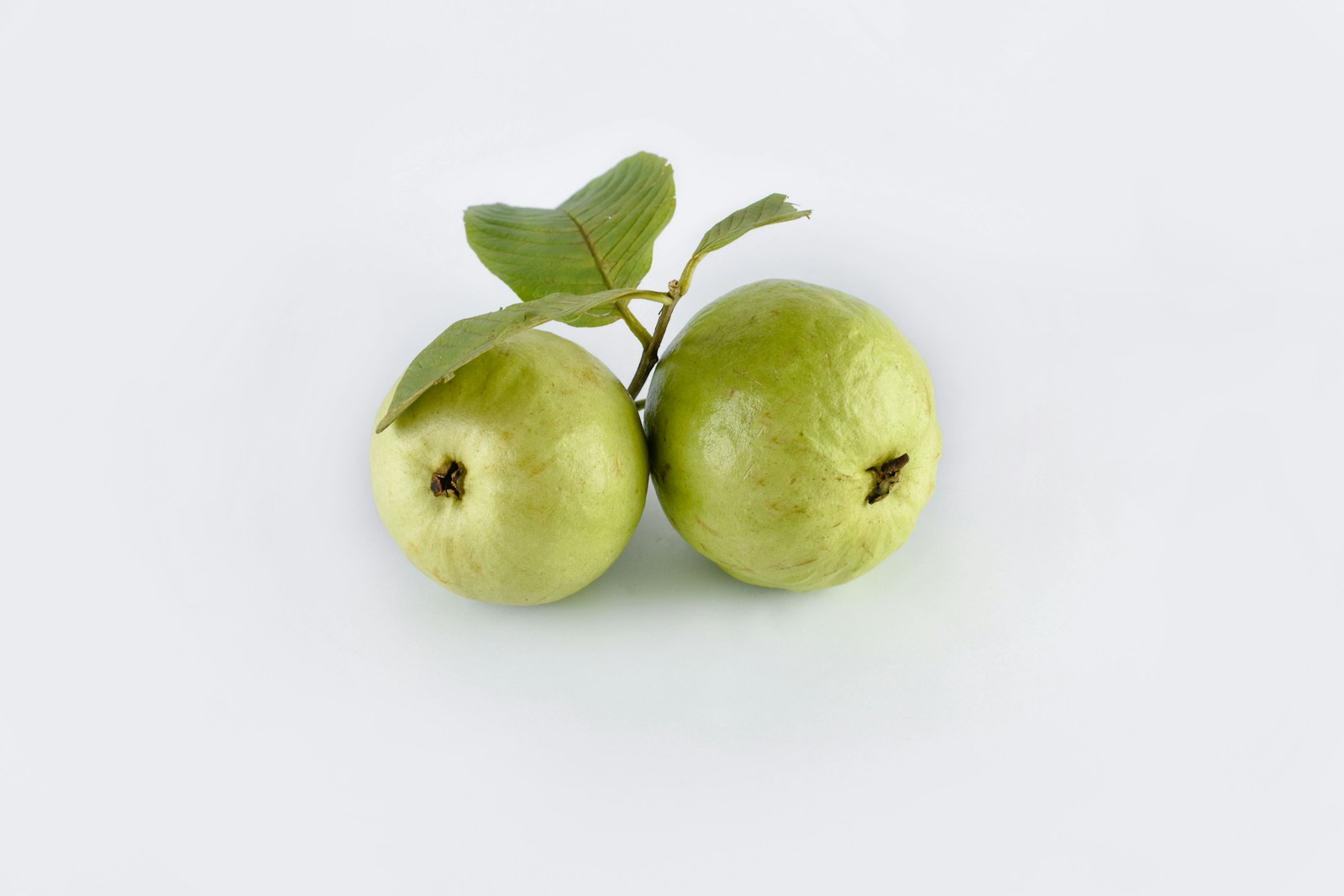
Guava
From 6 to 25+ tonnes per acre per year. High-density Allahabad Safeda or Lalit at 1,000 trees per acre with annual pruning rivals Egypt and Mexico.
From 6 to 25+ tonnes per acre per year. High-density Allahabad Safeda or Lalit at 1,000 trees per acre with annual pruning rivals Egypt and Mexico.
Most farms in India operate well below their yield potential. The gap is rarely about land or weather. It is about which seed, which water, which feed, and which decisions, made on which day. Here is what we are aiming for.
No magic. No buzzwords. Each of these is a small lever. Pulled together, they compound into the yield you see above.
Conventional guava at 6x6 m fits 110 trees per acre and yields 6-10 t. HDP at 2x1 m or 3x1.5 m fits 800-1,200 trees, kept as small bushes by pruning. Per-acre yield triples.
Allahabad Safeda is the export and modern-retail benchmark; large white-fleshed fruit, high TSS. Lalit is pink-fleshed and processor-friendly. We pick by buyer, not by tradition.
Guava bears on new shoots. A hard prune after harvest forces fresh shoots that bear the next crop. No prune means fewer, smaller fruit on old wood.
Guava can flower in two bahars (Mrig and Ambe). Withholding water 45-60 days before the desired bahar shifts harvest into a higher-price window. October-January fruit fetches 50-80% more than glut-season.
Most guava orchards run on rainfed monsoon. Drip with stage-wise NPK lifts a tree from 25-35 kg to 40-60 kg per year and improves fruit size and TSS.
Fruit-fly can wipe 30-40% of an unmanaged orchard. Non-woven bags fitted at lemon size protect fruit from fly, sunburn and bird damage. A-grade share rises sharply.
From day one to harvest, here is the actual work. Plain English. No jargon. This is the playbook we follow on every farm we manage.
Soil tested for pH, salinity and root-knot nematode. 60x60x60 cm pits with FYM, rock phosphate and neem cake.
Allahabad Safeda, Lalit or Pant Prabhat grafted saplings from accredited nurseries. 800-1,000 trees per acre at 3x1.5 m or 2x1.5 m spacing.
One drip ring per tree, 2-3 drippers as canopy spreads. Mulch under canopy. Inter-row maintained as cover crop or short-cycle vegetable.
Single-stem training to 60 cm, then 4-5 main scaffold branches selected. Light fruiting allowed in year 2.
After main harvest, branches cut back to 1-1.5 m to force fresh bearing wood. Centre kept open. Bordeaux paint on cuts.
Selected bahar followed for 2-3 years. Irrigation withheld 45-60 days before flowering. Light defoliation if needed.
Non-woven bag at lemon size on premium fruit. Picked at 75% colour change for distance markets. Pre-cooled within 12-24 hours.
What happens, when. So you know the path, the wait, and the pay-off, before you start.
Pits prepared, drip and mulch in, grafted saplings planted at start of monsoon.
Tree trained, light fruit allowed at year-end. First annual prune at 18 months.
5-8 t/acre. Bahar regulation starts. Buyer onboarded.
12-18 t/acre. A-grade share rises with bagging.
20-25+ t/acre. Productive for 20-25 years with annual pruning.
What it costs, what it returns, when it pays back. Honest ranges, not best-case-only numbers.
Every yield range here is anchored to research from Indian and international institutions. Not marketing. Not anecdote.
High-density guava at 800-1,200 trees per acre under drip and annual hard pruning yields 20-25+ t/acre/year against 6-10 t/acre under conventional 6x6 m spacing.
Bahar regulation through controlled water stress shifts guava harvest into the October-February premium-price window, lifting net realisation 40-70% over glut-season fruit.
Non-woven fruit bagging in guava at lemon size reduces fruit-fly and bird damage from 25-40% of fruit affected to under 5%, with A-grade share rising to 75-85%.
Mexico (18-22 t/ha) and Egypt (20-25 t/ha) significantly out-yield India's national average of 12-15 t/ha; the gap is largely explained by HDP, pruning and irrigation discipline.
We map your land, soil, water and current practice against the targets above and tell you, honestly, what your farm can actually deliver. No charge for the first conversation.
Get a Yield-Potential Audit