Back to Crop Potential
Fruit
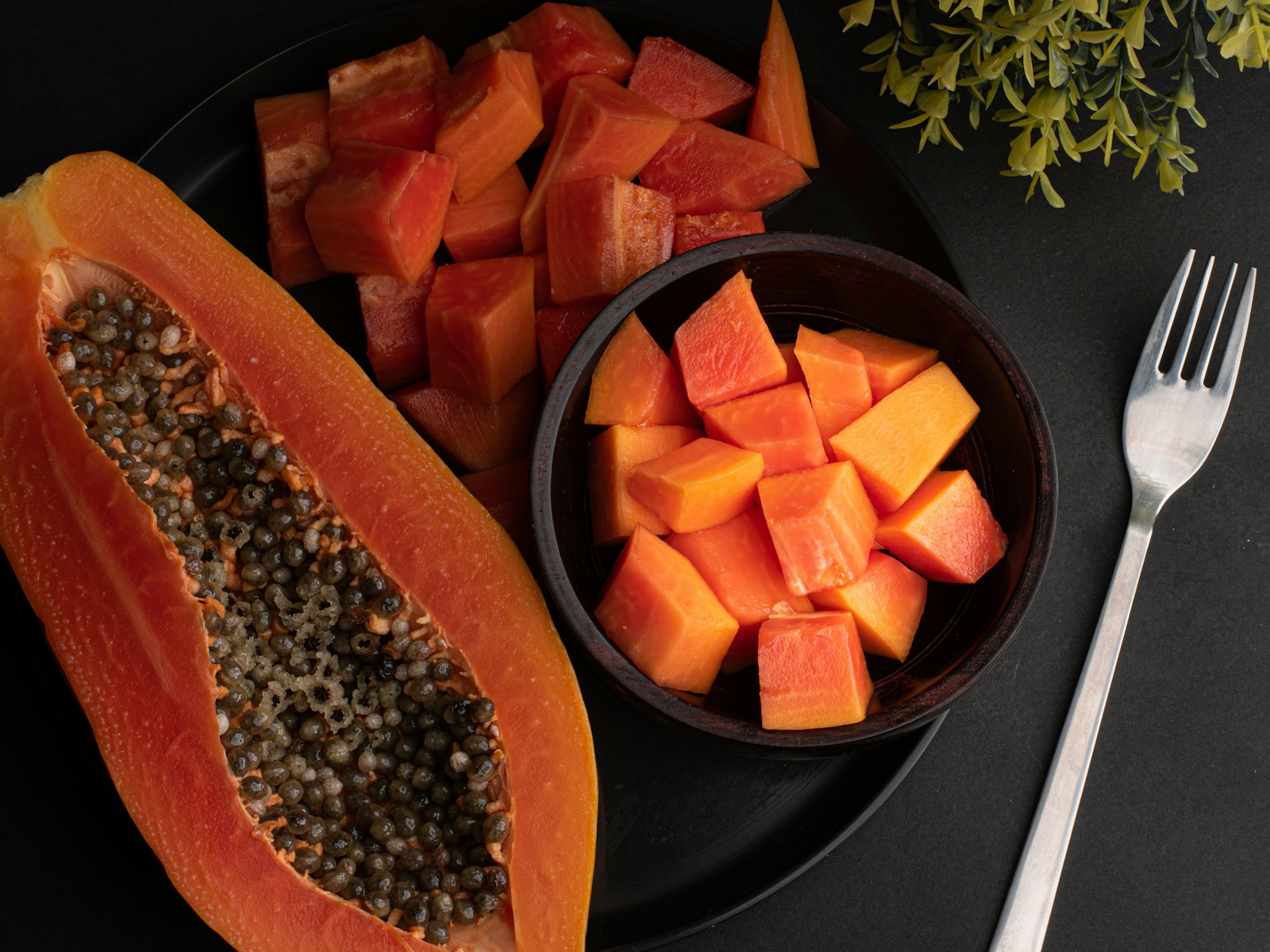
Papaya
From 30 to 80+ tonnes per acre per cycle. Red Lady hybrid with drip and mulch delivers in under a year, year-round once established.
From 30 to 80+ tonnes per acre per cycle. Red Lady hybrid with drip and mulch delivers in under a year, year-round once established.
Most farms in India operate well below their yield potential. The gap is rarely about land or weather. It is about which seed, which water, which feed, and which decisions, made on which day. Here is what we are aiming for.
No magic. No buzzwords. Each of these is a small lever. Pulled together, they compound into the yield you see above.
Red Lady (Taiwan F1) is gynodioecious; almost every plant fruits. Pulp is firm, deep red, and sweet at 12-14 brix. Yield at 60-90 kg per plant over a 9-15 month cycle is consistently demonstrated in Indian conditions.
Papaya ringspot virus (PRSV) is the single biggest threat. Drip avoids waterlogging, plastic mulch keeps roots clean, and a 200-mesh insect net at the boundary cuts aphid traffic. Plants stay healthy long enough to deliver the full crop.
Spacing at 1.8 x 1.8 m or 2 x 1.5 m fits 1,000-1,200 plants. Each plant produces less individually than a wide-spaced one but total per-acre yield rises 30-50%.
Papaya is shallow-rooted and continuously fruiting. Daily fertigation lifts yield 20-30% over weekly soil application by avoiding nutrient swings.
After month 9 the plant fruits continuously for 6-12 months. Cash flow is weekly, not lump-sum. Buyers pay weekly, not seasonally.
No replanting on the same plot. After a 12-15 month cycle we move to a fresh patch and rotate with cereals or legumes. Soil-borne and viral pressure stays low.
From day one to harvest, here is the actual work. Plain English. No jargon. This is the playbook we follow on every farm we manage.
Soil tested for nematode and Phytophthora load. Land deep-ploughed. 15 tonnes FYM per acre. Beds raised 30-45 cm where drainage is weak.
Red Lady or Taiwan-786 F1 seeds raised in pro-trays inside an insect-net nursery. 6-week-old, 25-30 cm seedlings transplanted, never older.
One inline drip per row, 2 lph dripper per plant. Black plastic mulch over beds. Boundary insect net or barrier crop (maize) to slow aphid traffic.
Weekly NPK + Ca + Mg via fertigation. EC and pH checked weekly. Recipe shifts vegetative to flowering to fruiting.
At first flowering (month 3-4), male plants identified and removed (Red Lady has 5-10% males). Final density 800-1,000 fruiting plants per acre.
Yellow sticky traps at 25/acre. Weekly scouting for aphid, mealybug and any leaf curl. Any PRSV-positive plant uprooted within 24 hours.
First fruits picked at 30% colour break for distance markets, full ripe for local. Picked twice a week. Graded by size, weight and skin colour. Pre-cooled within 24 hours.
What happens, when. So you know the path, the wait, and the pay-off, before you start.
Beds raised, drip and mulch laid, boundary net up. Seedlings raised in pro-trays.
1,000-1,200 seedlings transplanted at 1.8 x 1.8 m. Daily fertigation begins.
First flowers at 75-90 cm height. Male plants identified and removed.
Fruits visible at the crown. Switch to fruiting fertigation. Buyer onboarded.
First fruits ready. Picked twice a week. Volume rises week on week.
60-80+ tonnes harvested over the cycle. Plot cleared, soil rested, fresh planting on a different patch.
What it costs, what it returns, when it pays back. Honest ranges, not best-case-only numbers.
Every yield range here is anchored to research from Indian and international institutions. Not marketing. Not anecdote.
Red Lady and Taiwan-786 papaya hybrids under drip-fertigation in Karnataka and Andhra Pradesh deliver 60-90 t/acre/cycle, against open-pollinated Coorg Honey Dew and Pusa Dwarf at 30-40 t/acre/cycle.
High-density papaya at 1,000-1,200 plants per acre with daily drip-fertigation and sex sorting at flowering increases per-acre yield by 30-50% over conventional 1.5 m x 1.5 m spacing.
Hawaii sets the global benchmark for papaya productivity at 80-100 t/ha/cycle under intensive drip and PRSV-resistant cultivars; commercial Indian yields trail at 40-50 t/ha despite favourable climate.
PRSV management via early uprooting of infected plants, boundary insect netting and aphid scouting reduces virus incidence from 30-50% to under 10% over a 12-month cycle.
We map your land, soil, water and current practice against the targets above and tell you, honestly, what your farm can actually deliver. No charge for the first conversation.
Get a Yield-Potential Audit