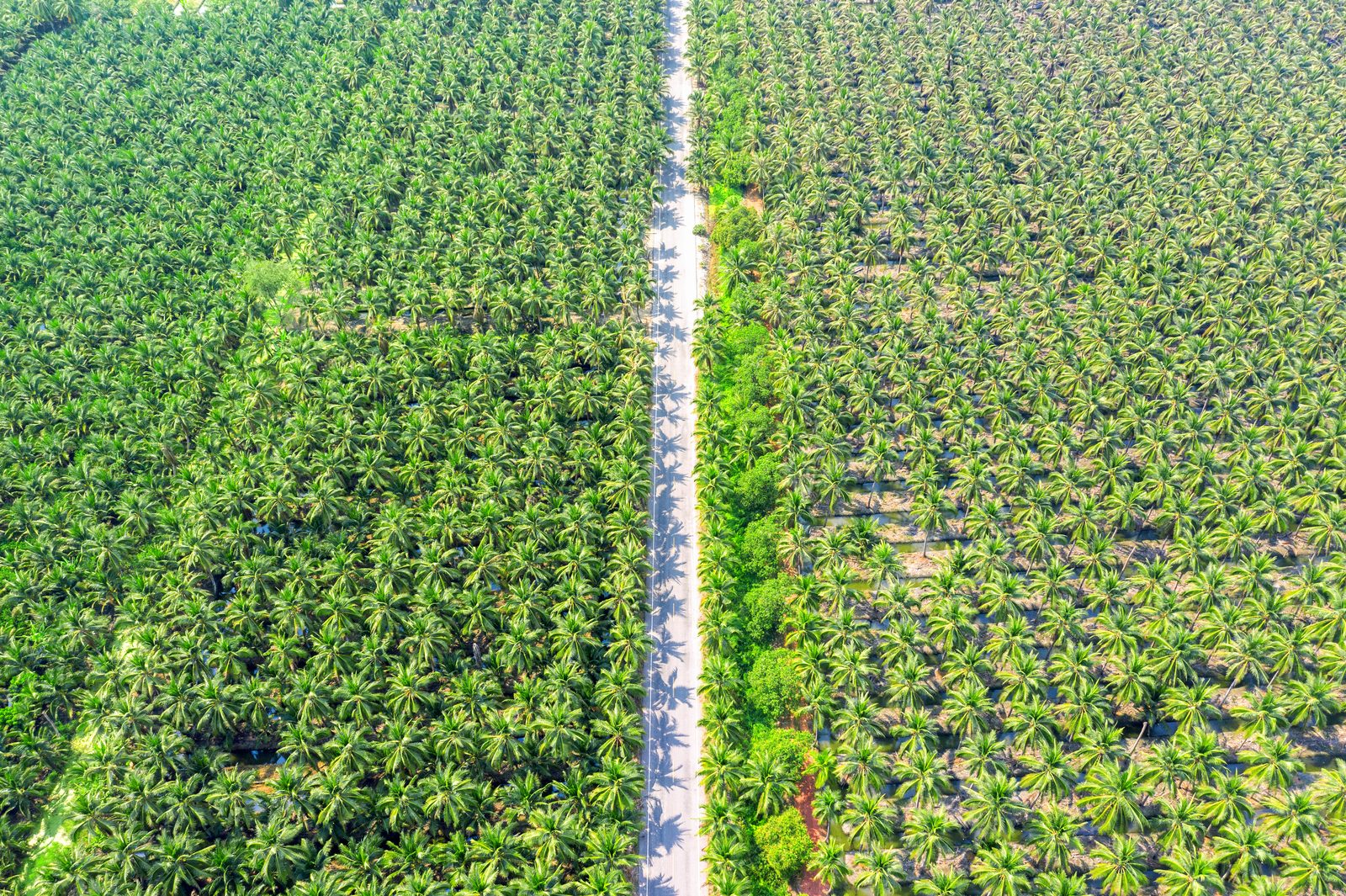
Every farm is different, and every intercrop plan should be too. That's why we don't send you a PDF template. Our agronomy team visits your land in person, walks every row with you, understands your goals, and designs an intercrop plan built for YOUR soil, YOUR water, YOUR climate, and YOUR market. The outcome: a second revenue stream that starts earning within the first harvest cycle, while your primary plantation keeps maturing.
02Core Offerings
What's Included
01
On-Site Farm Visit
Our agronomist visits your farm, inspects soil, measures canopy, assesses water, and understands your vision, face to face, on your land.
02
Custom Intercrop Plan
You receive a plan made specifically for your farm, what to plant where, when to plant it, and how much income to expect, based on what we saw on the ground.
03
Short-Term ROI Focus
We prioritize quick-cash crops that deliver your first harvest income in 3-6 months, so the plan pays for itself before your primary crop even starts fruiting.
04
Market & Price Guidance
We tell you which intercrops sell fastest in your local mandi, what prices to expect, and who the nearest buyers are.
03Our Process
How We Engage
01
Book a Discovery Call
A 15-minute call to understand your farm location, primary crop, and what you want out of intercropping.
02
We Visit Your Farm
Our agronomist comes on-site, walks your land with you, and takes the soil, water, and canopy readings needed for an accurate plan.
03
We Give You the Plan
Within 7 days of the visit, you receive a complete intercrop recommendation, crop list, planting schedule, expected income, and next steps.
04
Fast-Track to First Harvest
We help you source seeds/saplings and stay available on call through planting, so your first short-cycle crop is earning within the first season.
DDDeep Dive
Intercrop Economics: LER, Light Geometry, and Allelopathy
A good intercrop plan is not "plant something in the gap." It is a calculated three-way balance: spatial light competition, root-zone resource competition, and chemical (allelopathic) interaction. Below is the framework we apply on every farm visit.
01
Land Equivalent Ratio: the gold-standard intercrop metric
LER answers the question: how much extra land would I need to grow these crops separately to match the intercrop's output? An LER > 1.0 means the intercrop beats monoculture on land productivity. Our target on every plan: LER ≥ 1.3.
Land Equivalent Ratio
LER = (Yi_a ÷ Ym_a) + (Yi_b ÷ Ym_b)
Yi_a = intercrop yield of crop a · Ym_a = monoculture yield of crop a · same for b. LER > 1.0 = intercrop is more productive than separate monocultures.
Well-designed coconut + pineapple + banana intercrop systems routinely deliver LER 1.5-1.8, meaning 50-80% more total output per hectare than the same crops grown in separate fields.
02
Light competition: the geometry decision
The first principle of intercropping is sunlight allocation. Plantations have a vertical light gradient: full sun above canopy, dappled below, deep shade at ground level. We match each intercrop to the light layer it tolerates:
Light layer
PAR availability
Compatible intercrops
Full canopy (above)
100%
Primary crop only: coconut, areca, mango
Dappled (60-80%)
60-80%
Banana, papaya, drumstick, cocoa, pepper vine
Light shade (40-60%)
40-60%
Turmeric, ginger, elephant foot yam, arrowroot
Deep shade (15-40%)
15-40%
Cardamom (in cocoa shade), zingiber, vanilla, certain ferns
Some plants chemically suppress others through root or leaf exudates (allelochemicals). Walnut + tomato fails. Sorghum + most vegetables fails. Tagetes (marigold) helps by suppressing nematodes. We screen every intercrop pairing against the documented allelopathic incompatibilities:
Encourage: Basil + tomato: repels whitefly, improves fruit aroma
04
First-income timeline: the 90 to 180 day rule
The whole point of intercropping young plantations is cash flow before the primary crop matures. We pick short-cycle intercrops that compress the income gap:
Time to first harvest income: coconut inter-row intercrops (days)
05
Revenue stacking: what real numbers look like
A 1-acre coconut plantation in years 1-4 (before nuts come) can earn ₹2-4 lakh/yr from intercrops alone. The actual stack we typically recommend for a 1-acre new coconut farm:
Year
Intercrop layer
Expected revenue (₹/acre)
Notes
Year 1
Banana (1,000 plants) + Vegetables in alleys
₹1.8-2.5 lakh
Banana cash from Y1-Q4
Year 2
Banana ratoon + Pineapple
₹2.2-3.0 lakh
Pineapple peaks at month 18-22
Year 3
Pineapple + Turmeric + Cocoa setup
₹2.0-3.5 lakh
Cocoa planted at end of year
Year 4
Cocoa partial + Pepper
₹0.8-1.5 lakh + primary crop begins
Coconut juvenile nuts start
Year 5+
Cocoa + Pepper + Coconut nuts
₹3.5-5.5 lakh+
Full system mature
P1Intercrop Programs
Detailed Patterns by Primary Crop
Scientifically validated intercrop combinations for each major plantation system, with crop-stage-specific selections and expected revenue per acre.
P2Region-Wise Suitability
Agro-Climatic Zone Recommendations
Every region has unique rainfall, soil, and market dynamics. Here is our zone-by-zone intercrop matrix:
04Technology
Tools & Methodology
Engineering-grade tools and scientifically validated methods underpin every deliverable.
On-site farm visitSoil & canopy field assessmentLocal mandi price researchShort-cycle crop selectionCustom planting calendarWhatsApp advisory support
05Ideal For
Who This Is For
This service delivers maximum ROI for the following profiles:
Coconut, areca, mango, rubber plantation owners
New farm investors wanting quick cash flow
Farmers with bare inter-row space
Anyone tired of one-crop dependency
06Deliverables
What You Receive
On-site farm visit report
Custom intercrop plan document
Short-term ROI projection
Seed/sapling sourcing guidance
07FAQs
Frequently Asked
How quickly will I see income from intercropping?
Our plans prioritize short-cycle crops, vegetables, pulses, and fast-growing cash crops, that give you harvest income in 90-180 days. You start earning before your primary plantation even thinks about fruiting.
Do you actually come to my farm?
Yes, every engagement starts with a physical farm visit. No generic advice over the phone. We walk your land, see your trees, check your soil, and build the plan on what we actually see.
What does the first consultation cost?
The initial 15-minute discovery call is a no-obligation chat. The on-site farm visit and custom plan is a one-time paid engagement, and it's typically recovered from the first intercrop harvest.
Will intercropping hurt my coconut/mango/areca trees?
No, when done right, intercrops actually improve primary crop yield. We only recommend companion crops that don't compete with your main plantation for water or nutrients. That's the whole point of visiting the farm first.